


The Complete Guide to New Home Equity on the Eastside (2026)
Buying a new construction home on Seattle's Eastside is a significant financial decision. The long-term equity potential of that purchase depends on more than curb appeal. Location, lot characteristics, build quality, standard features, and layout flexibility all influence how well your home holds and grows its value.
Sapphire Homes has spent over 13 years building new construction communities across the Eastside. We have seen firsthand which factors make the greatest difference in lasting equity.
This guide walks you through every element that shapes long-term home equity in new construction on the Eastside. Whether you are purchasing your first home or upgrading to a larger property, the information here will help you evaluate your options with confidence and clarity.
Key Takeaways: New Home Equity on Seattle's Eastside
- Location near strong employers, quality schools, and transit corridors is the most durable driver of home equity on the Eastside.
- Lot size, orientation, and privacy directly affect long-term resale appeal in suburban Eastside neighborhoods.
- Flexible floor plans with open concept living areas, home offices, and multigenerational layouts protect future buyer demand.
- Standard high-quality finishes reduce ownership costs and signal lasting value to future buyers at resale.
- Sapphire Homes includes features like quartz countertops and sound resistant windows as standard in every new construction home.
Why Location Is the Foundation of Long-Term Home Equity
Location is the single most important factor in whether your new construction home appreciates steadily over time. On Seattle's Eastside, that means proximity to major employers such as Microsoft, Meta, and Google, access to high-performing school districts, and connectivity to regional transit and highways like I-405 and SR 520.
Cities including Bellevue, Redmond, Kirkland, and Issaquah continue to attract professionals and families because of the combination of employment access and quality of life. Homes in these areas benefit from sustained buyer demand, which supports long-term property value even when broader markets shift.
When evaluating a location, look at planned infrastructure investments, zoning changes, and nearby commercial development. Areas with expanding employment centers and public transit improvements tend to see stronger, more consistent appreciation over time.
How School District Quality Affects New Home Equity
Homes within well-regarded school districts consistently hold and grow their value more effectively than comparable homes in lower-rated districts. On the Eastside, the Bellevue School District and the Lake Washington School District are recognized for strong academic outcomes, drawing families who prioritize education access.
This matters even if you do not have school-age children. School district quality is one of the most reliable indicators of neighborhood desirability, and it broadens the pool of potential buyers when you eventually sell. A new construction home in a district with strong performance data carries a resale advantage that compounds over the years.
What Role Does Employer Proximity Play in Home Appreciation?
The Eastside's concentration of technology companies and corporate campuses creates a reliable base of high-income buyers. Cities like Redmond and Bellevue benefit from this employment density, which keeps housing demand strong even during periods of economic uncertainty.
Proximity to a major employer shortens commute times and increases the number of buyers who consider your neighborhood desirable. That demand translates directly into property value stability and consistent appreciation over a longer holding period.
How Lot Characteristics Influence Long-Term Value
The lot your home sits on has a lasting impact on equity that many buyers underestimate. Lot size, shape, orientation, and privacy all contribute to both day-to-day livability and future resale appeal.
On the Eastside, larger lots are increasingly uncommon as land becomes more limited. A home on a spacious lot with mature trees, natural buffers, or territorial views will stand out in a market where density is rising. These characteristics are difficult to replicate and become more valuable over time.
Why Lot Size and Privacy Matter More Over Time
As new development fills available land, homes on larger or more private lots become relatively scarce. Scarcity drives value. A new construction home built on a quarter-acre lot with natural screening from neighboring properties will typically outperform a comparable home on a smaller, more exposed lot at resale.
When comparing new construction communities, consider the spacing between homes, the availability of corner or cul-de-sac lots, and whether the site plan preserves existing trees or topographic features. These details may seem minor at purchase, but they become significant differentiators when your home enters the resale market.
How Does Lot Orientation Affect Home Value?
A south-facing or west-facing backyard receives more natural light, which appeals to most buyers. Homes oriented to capture mountain views, territorial vistas, or sunset exposure tend to command a premium both at initial purchase and at resale.
On the Eastside, properties with views of the Cascade Range, Lake Sammamish, or the surrounding foothills carry a measurable advantage. Even partial views or elevated positions within a community can add value that grows as the area around the home develops.
Why Floor Plan Flexibility Protects Your Equity
A home that adapts to changing needs is a home that stays desirable. Floor plan flexibility is one of the most overlooked factors in long-term equity, and it matters more on the Eastside, where buyer expectations lean toward modern layouts with room for remote work, multigenerational living, and entertaining.
Homes with rigid single-purpose rooms often lose appeal as buyer preferences shift. Open concept layouts that connect kitchens, dining areas, and living spaces remain consistently popular because they serve multiple lifestyles and household configurations.
How Open Concept Layouts Support Resale Value
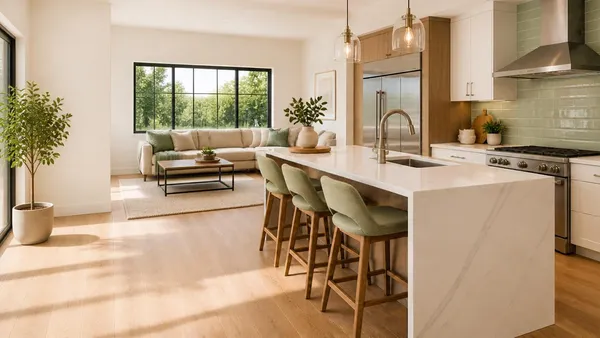
Open concept living areas create a sense of space that resonates with a broad range of buyers. On the Eastside, where professionals frequently work from home, a layout that flows naturally from a chef-inspired kitchen into a great room provides both functionality and visual appeal.
This layout approach also makes a home feel larger than its square footage suggests, which is a practical advantage in a market where land costs push builders toward efficient footprints. Sapphire Homes designs its floor plans with this flexibility in mind, incorporating open great rooms, generous islands, and clear sightlines that serve both everyday living and entertaining.
What Makes Multigenerational Floor Plans Valuable?
Multigenerational living is a growing trend across the Eastside. Floor plans that include a main-floor bedroom with a three-quarter bath, or a lower-level guest suite with its own entrance, appeal to families with aging parents, adult children, or frequent guests.
This flexibility extends the pool of interested buyers at resale. A home that can accommodate multiple living arrangements without renovation is more versatile and, as a result, more valuable. Communities built by Sapphire Homes, such as those in Issaquah, often include these multigenerational options as part of the standard design.
How Build Quality Affects Home Equity Over Decades
Build quality determines how well a home performs over time, and performance directly affects equity. A well-built home requires less maintenance, retains its appearance, and avoids the costly surprises that erode value in older or lower-quality construction.
The difference between a builder who uses premium materials and rigorous construction oversight and one who relies on minimum code requirements becomes apparent within the first five to ten years of ownership. Buyers on the Eastside should evaluate build quality as seriously as they evaluate location.
Why Construction Oversight Matters for Long-Term Value
A builder whose ownership team is directly involved in every stage of construction, from initial site development to final inspection, delivers a more consistent product. That consistency reduces the risk of structural issues, material failures, and warranty claims that can diminish your home's condition and value.
Sapphire Homes takes a hands-on approach, with the ownership team personally overseeing construction at every phase. With over 275 homes delivered across 30+ communities, this level of direct involvement is reflected in the feedback from homeowners who describe the build quality as exceeding expectations.
How Do Warranties Protect Your Home's Equity?
A comprehensive warranty is both a practical safeguard and a signal of the builder's confidence in their work. Warranties that cover workmanship, structural components, and major systems give you financial protection during the critical first years of ownership.
Every Sapphire home is backed by a 1-Year Sapphire Homes builder warranty and a 6-Year RWC extended structural warranty, providing documented protection that supports your home's value. Buyers comparing builders should ask for warranty terms in writing and understand exactly what each coverage period includes. More information is available on the Sapphire Homes warranty page.
How Standard Features Add Measurable Value to New Construction
The features included as standard in a new construction home affect both your monthly ownership costs and your home's resale position. Homes with premium finishes and modern systems included from day one avoid the cycle of upgrades that many resale buyers face within the first few years.
Many builders treat high-quality finishes as upgrades that add thousands to the purchase price. With a locally owned builder like Sapphire Homes, many of the features that other builders charge extra for come standard. That distinction matters at resale, when the next buyer evaluates what is already included in the home versus what needs to be added.
Which Standard Features Have the Greatest Impact on Equity?
Features that reduce maintenance, lower utility costs, or improve daily comfort tend to hold the most resale value. On the Eastside, where buyers are accustomed to high-quality finishes, the following standard inclusions make a meaningful difference.
- Quartz countertops throughout kitchens and bathrooms
- Stainless steel appliances in chef-inspired kitchens
- Extensive hardwood floors and waterproof wood-look luxury vinyl plank flooring in key living areas
- Sound resistant windows that reduce exterior noise and improve energy efficiency
- Covered outdoor living spaces for year-round use in the Pacific Northwest climate
These are not decorative upgrades. They are functional elements that affect how the home performs and how future buyers perceive its value.
How Energy Efficiency Contributes to Long-Term Equity
Energy-efficient construction lowers monthly utility costs and aligns with growing buyer expectations around sustainability. Features like sound resistant windows, high-performance insulation, and efficient HVAC systems reduce the total cost of ownership and make a home more competitive at resale.
On the Eastside, where environmental awareness is high among buyers, energy efficiency is a practical selling point. A home built to current energy codes with additional efficiency features as standard will outperform older homes that require retrofitting.
According to a 2025 report from the National Association of Realtors, a significant share of buyers and agents reported that energy efficiency and sustainability features positively influenced purchase decisions.
How to Evaluate Resale Durability Before You Buy
Resale durability measures how well a home competes in the market five, ten, or twenty years after purchase. It is influenced by a combination of location, construction quality, layout, and community planning. The homes that hold their value most effectively are those that remain desirable to a broad pool of buyers, not just the original owner.
Before committing to a new construction purchase, evaluate the home through the lens of the next buyer. Ask whether the layout is flexible enough to serve different household types, whether the finishes will age well, and whether the location will continue to attract demand.
What Makes a New Construction Home Resilient at Resale?
Resale resilience comes from a combination of factors that are difficult to change after purchase. Location cannot be altered. Lot characteristics are fixed. Build quality is embedded in the structure. Floor plan flexibility is determined at the design stage.
Finishes and systems can be updated, but homes that start with high-quality materials require less investment to remain competitive. A home built with quartz countertops, extensive hardwood floors, and covered outdoor spaces will need fewer updates to attract buyers a decade later than one built with entry-level finishes.
How Community Design Affects Long-Term Property Value
The community surrounding your home contributes to its equity trajectory. Thoughtfully designed communities with walkable access to parks, trails, and neighborhood amenities maintain buyer appeal over time. Communities that feel rushed or overcrowded tend to see slower appreciation.
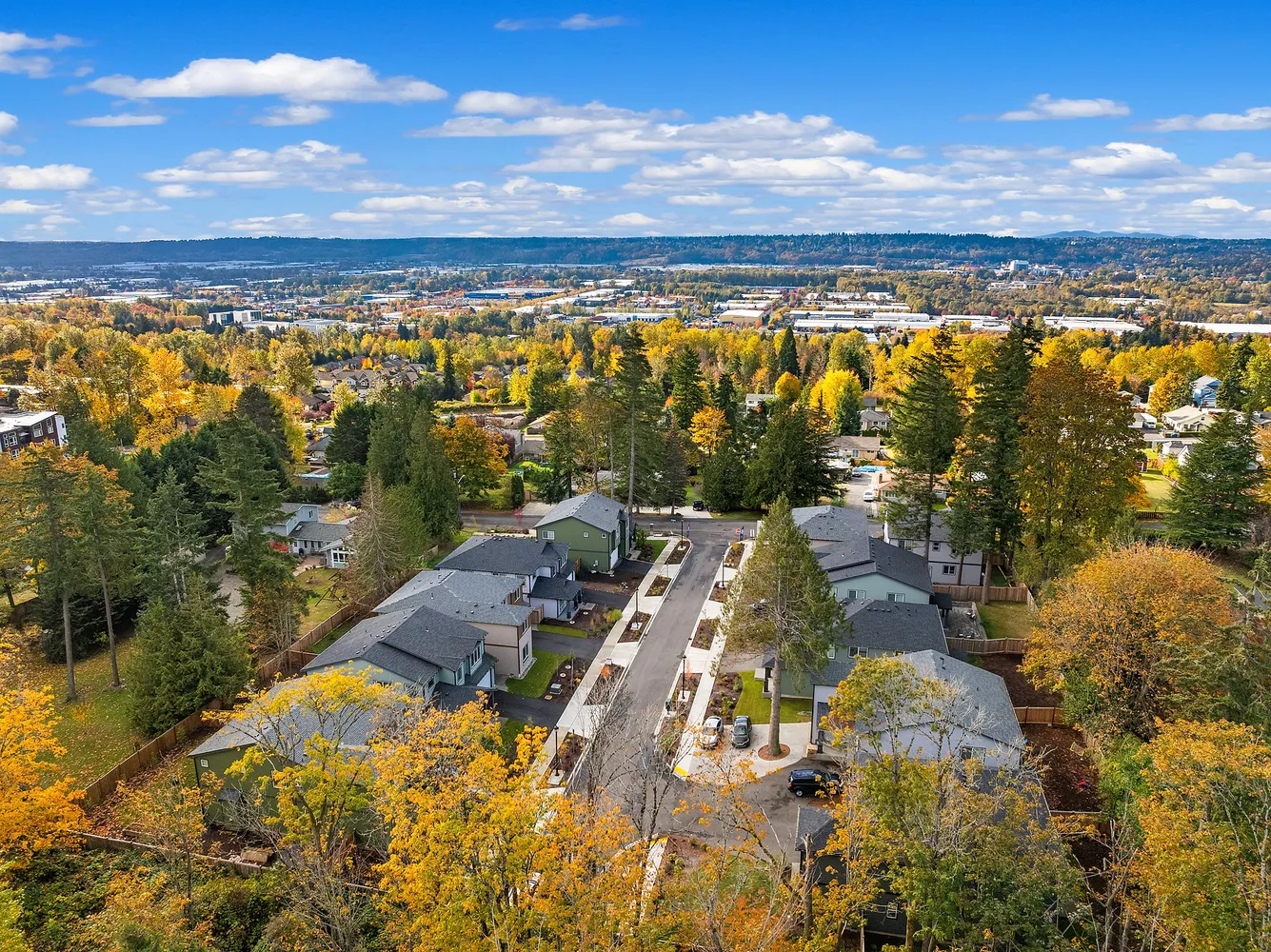
On the Eastside, look for communities built with attention to spacing, landscaping, and access to local amenities. Sapphire Homes plans each community with these considerations in mind, selecting sites that offer proximity to schools, parks, shopping, and commuter routes. That approach is designed to support not just the initial purchase but the long-term value of every home in the neighborhood.
Understanding the Eastside Market and What Drives Appreciation
The Seattle Eastside real estate market has demonstrated consistent long-term appreciation, driven by a combination of job growth, population inflows, limited land availability, and high quality of life. Bellevue, Redmond, Kirkland, and Issaquah remain among the most sought-after communities in the Pacific Northwest for both homeowners and investors.
New construction homes on the Eastside benefit from this underlying demand. Buyers who choose a well-located, well-built home are positioned to benefit from the same market dynamics that have supported property values across the region for decades.
How Supply Constraints Support Eastside Home Equity
The Eastside has limited land available for new residential development. King County zoning restrictions, environmental protections, and the geographic constraints of lakes, mountains, and urban growth boundaries all restrict the pace of new construction. This supply limitation supports property values by keeping inventory below the level of buyer demand.
According to data from the Northwest Multiple Listing Service, Eastside residential inventory reached approximately 4.1 months of supply in the fall of 2026, up from 1.5 months in recent years but still below the threshold considered a balanced market. That scarcity benefits homeowners by maintaining upward pressure on values over time.
What Should Eastside Buyers Watch in the Years Ahead?
Several factors will continue to shape home equity on the Eastside in the coming years. Continued expansion of corporate campuses in Bellevue and Redmond, improvements to regional transit including light rail extensions, and ongoing population growth all point toward sustained demand.
Buyers who invest in a new construction home with strong fundamentals, including a desirable location, quality construction, flexible layouts, and premium standard features, are well positioned to build equity regardless of short-term market fluctuations. The key is focusing on the factors within your control.
A Step-by-Step Process for Evaluating Equity Potential
Evaluating the long-term equity potential of a new construction home requires a structured approach. The following steps will help you compare options systematically and make a decision grounded in durable value rather than surface-level appeal.
Step 1: Research the Neighborhood and Surrounding Area
Start by examining the neighborhood's employment base, school district ratings, and infrastructure plans. Look for areas with diversified job growth, highly rated schools, and planned transit or road improvements. These fundamentals support long-term demand and appreciation.
Step 2: Assess the Lot and Its Long-Term Appeal
Walk the lot and consider its size, orientation, and relationship to neighboring properties. Evaluate privacy, natural features, and exposure to light. A lot that offers space, views, or natural screening will hold its appeal better than a tightly spaced alternative.
Step 3: Review the Floor Plan for Flexibility
Look for layouts that accommodate different life stages. Main-floor bedrooms, dedicated home office spaces, open concept living areas, and multigenerational suites are features that keep a home relevant to a wide range of buyers.
Step 4: Evaluate Build Quality and Builder Track Record
Research the builder's history, construction approach, and warranty coverage. Builders with documented track records, direct ownership involvement, and comprehensive warranties offer a level of accountability that protects your investment.
Step 5: Compare Standard Features Across Builders
Request a written list of standard inclusions from each builder you are considering. Compare finishes, systems, and energy-efficiency features side by side. Homes with higher-quality standard features require less post-purchase investment and command stronger resale positions.
Step 6: Project Future Market Conditions
Review recent comparable sales, current inventory levels, and local economic indicators. While no one can predict the market precisely, understanding the direction of supply, demand, and infrastructure investment will give you a clearer picture of where values are headed.
In Conclusion: Building Equity Starts with the Right Home
Long-term home equity on Seattle's Eastside is built on a foundation of location, lot quality, construction standards, layout flexibility, and included features. Each of these elements contributes to how well your home holds and grows its value over the years ahead.
Sapphire Homes builds new construction communities across the Eastside with each of these factors in mind. With over 275 homes delivered, locally owned operations, and a commitment to including premium features as standard, we invite you to explore our available homes and see how the right new construction home can serve as a strong long-term investment.
Every Sapphire home is backed by a 1-Year Sapphire Homes builder warranty and a 6-Year RWC extended structural warranty, providing peace of mind long after move-in day.
FAQs About New Home Equity on Seattle's Eastside
What factors most influence long-term equity in new construction homes?
Location, build quality, floor plan flexibility, lot characteristics, and standard feature quality are the primary drivers. A home that combines strong fundamentals across all five areas is positioned for consistent appreciation over time.
How does buying new construction compare to resale for building equity?
New construction homes start with modern systems, current building codes, and full warranty coverage. These factors reduce early ownership costs and maintenance risk, allowing more of your investment to go toward building equity rather than addressing deferred repairs.
Does Sapphire Homes include high-quality features as standard?
Sapphire Homes includes quartz countertops, stainless steel appliances, extensive hardwood floors, sound resistant windows, and covered outdoor living spaces as standard in every home. Many of these features are treated as upgrades by other builders, giving Sapphire homeowners a measurable value advantage at purchase and at resale.
Why is the Eastside considered a strong market for home equity?
The Eastside benefits from a concentrated employment base, high-performing school districts, limited land availability, and consistent population growth. These factors create sustained buyer demand that supports property values over the long term. Sapphire Homes builds in this market specifically because these fundamentals align with durable home equity for buyers.
How can I evaluate a builder's impact on my home's future value?
Research the builder's track record, construction oversight process, warranty coverage, and standard feature list. Builders with documented experience, hands-on ownership involvement, and comprehensive warranties provide a level of accountability that directly supports your home's long-term value. Sapphire Homes provides transparent information on all of these elements.